- Daytime consumption is stable enough to offset real grid demand.
- The roof or site can physically support the installation.
- The project may later expand toward storage or a hybrid scheme.
Solar for self-consumption
A scenario for sites with strong daytime demand where the main goal is to reduce grid purchase without losing operational control.
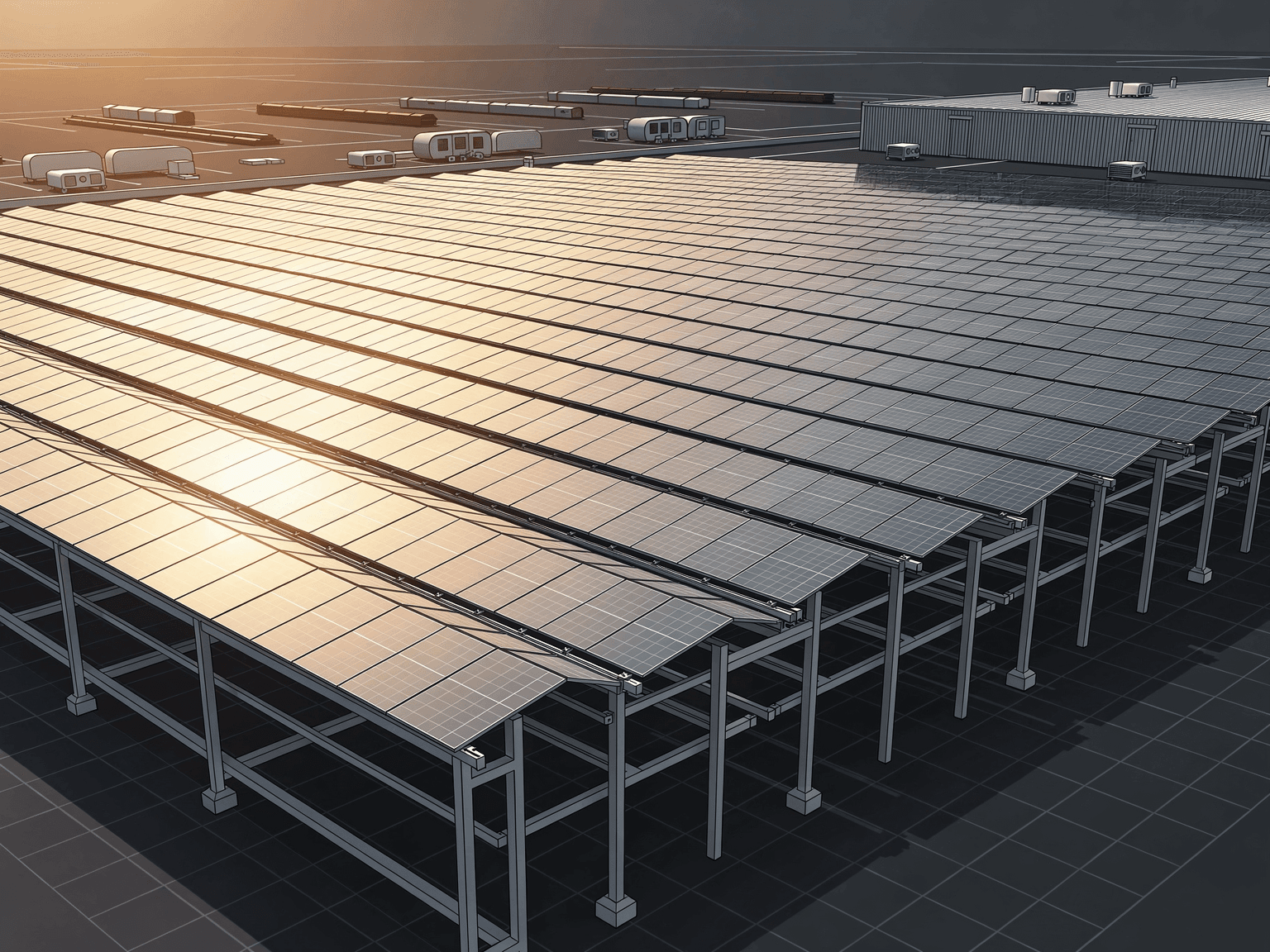
When this makes sense
It fits sites with meaningful daytime load and usable area where solar generation can be matched to a real operating profile.
What it protects economically
Manufacturing
Offsets daytime line demand, auxiliaries, HVAC, and process-support loads.
Logistics and warehousing
Reduces operating cost for lighting, automation, charging zones, and cold areas.
Retail and service sites
Improves cost predictability for stores and commercial facilities with daytime operations.
What KOLO assembles and owns
Solar only works as an operating system when generation, power conversion, protection, and monitoring are designed as one loop.
System layer
PV field
Modules and layout selected against geometry, irradiation, and target production behavior.
Power layer
Inverter, protection, switching, and proper integration into the live electrical system.
Monitoring
Visibility into generation, load behavior, and events from day one.
KOLO responsibility
Energy audit
We define the demand profile, the site limits, and the business case.
Design
We shape the connection logic, the specification, and the expansion path.
Commissioning
We launch the system and verify it under real facility load.
Need solar architecture built around your load profile?
We design around the actual load shape and site limits, not around a generic package.
Or email directly: office@kolo.energy